

For many beginners, safety is the first real question. People are often interested in DIY skincare because they want more control over ingredients, fewer unnecessary additives, or a more intentional routine. But that interest is often followed by hesitation. What if a recipe goes wrong? What if a product irritates the skin? What if something is not stored properly?
These are good questions to ask. In fact, asking them is part of a safe approach.
DIY skincare is not automatically unsafe, but it is also not something to treat casually. Like cooking, candle-making, or hair coloring at home, it works best when done with the right materials, clear instructions, and good habits. Most beginner mistakes do not come from bad intentions. They come from guessing, skipping steps, or trying to make something more advanced than necessary.
The good news is that safe DIY skincare usually starts with a few calm, practical principles. You do not need to become a cosmetic chemist to begin more carefully. You just need to understand where safety matters most.
Yes, DIY skincare can be safe — when it is done thoughtfully

DIY skincare can be a safe and enjoyable practice when you work within simple boundaries. That usually means starting with beginner-friendly recipes, measuring accurately, keeping tools and containers clean, and avoiding unnecessary complexity.
What makes DIY feel risky for some people is that online advice is often inconsistent. One source makes everything sound effortless, while another makes it sound dangerous. The truth sits somewhere in the middle.
A simple facial oil, a very basic hydrating blend, or a gentle clay mask is very different from trying to improvise a highly active exfoliating formula or preserve a water-based product without enough knowledge. Safety depends less on the label “DIY” and more on the kind of product you are making, the ingredients you choose, and the care you bring to the process.
That is why beginners usually do best when they start small and stay realistic.
The most important safety habit is choosing simple recipes
A safe start in DIY skincare usually begins with restraint.
Many beginner issues come from trying to combine too many ingredients too soon. More ingredients do not automatically make a product better. In many cases, they make it harder to understand what the formula is doing, harder to know what caused irritation, and harder to store or use properly.
Beginner-friendly recipes tend to work best when they are:
-
short and clearly written
-
made with a small number of ingredients
-
easy to measure accurately
-
easy to store properly
-
realistic to use up within a reasonable time
Simple formulas are easier to evaluate and easier to repeat successfully. They also support one of the nicest parts of DIY skincare: actually learning what each ingredient contributes.
Hygiene matters more than many beginners expect
One of the easiest ways to make DIY skincare safer is to take cleanliness seriously.
This does not mean creating a sterile lab at home. It means reducing avoidable contamination as much as possible. Dirty tools, unwashed hands, old containers, and messy work surfaces can all introduce problems into a formula before it even reaches the skin.
A good basic routine looks like this:
Wash your hands before starting. Clean and dry your tools thoroughly. Use clean containers in good condition. Avoid touching the inside of bottles or jars more than necessary. Close containers promptly after filling them. Label the product clearly with the date it was made.
These habits are simple, but they do a lot of work. They help support product quality, reduce confusion later, and make the whole practice feel more disciplined and reliable.
Patch testing is one of the safest habits you can build

Even when a recipe looks gentle on paper, skin can still react differently from person to person. That is why patch testing matters.
A patch test helps you check how your skin responds before you apply a new product more broadly. This is especially important if you have sensitive skin, a history of reactivity, or are trying an ingredient for the first time.
Patch testing does not guarantee that nothing will ever irritate your skin. But it lowers the chance of an unpleasant surprise and encourages a more observant relationship with your routine.
For beginners, this habit is one of the simplest ways to stay cautious without becoming anxious.
Accurate measuring makes DIY safer
Guessing is one of the biggest enemies of safe DIY skincare.
When people measure “about a spoonful” or add “just a little more,” they lose control over the formula. That can affect texture, consistency, and — depending on the recipe — how the skin responds to it.
Using a small precision scale helps keep recipes more consistent and easier to trust. It also makes it much easier to repeat a formula later if you like it.
This is especially important when working with more potent ingredients, but even simple recipes benefit from clear, repeatable measurements. Safety is not only about avoiding dramatic mistakes. It is also about building a process you can actually understand.
Water-based products require more care

Not all DIY skincare carries the same level of risk.
One of the biggest practical differences is whether a product contains water or not. Water-based formulas often need more discipline because they are generally more sensitive to spoilage and stability issues than very simple anhydrous blends.
For that reason, many beginners find it easier to begin with simpler projects before moving toward products that require more technical knowledge, tighter storage practices, or more advanced formulation decisions.
This does not mean water-based skincare should be feared. It simply means that some categories deserve more caution, clearer instructions, and a better understanding of shelf life and storage.
Safety also means knowing when not to DIY
A thoughtful DIY practice includes limits.
If a recipe seems confusing, uses too many strong actives, gives vague measurements, makes unrealistic claims, or leaves storage questions unanswered, that is usually a sign to pause. Not every formula shared online deserves to be made.
The safest beginner mindset is not “I can make everything.” It is “I can learn step by step, and I do not need to rush.”
That kind of restraint protects both your skin and your confidence.
A gentle way to approach DIY skincare with more confidence
Safe DIY skincare is rarely about being fearless. It is about being steady.
When beginners work with clear recipes, clean tools, accurate measuring, simple ingredients, and realistic expectations, the process becomes much more approachable. It starts to feel less like experimenting on your skin and more like learning a careful new skill.
That is also why education matters so much. The more clearly a recipe or guide explains what is needed, the easier it becomes to make good decisions.
A gentle way to begin with Whisper of Botanicals

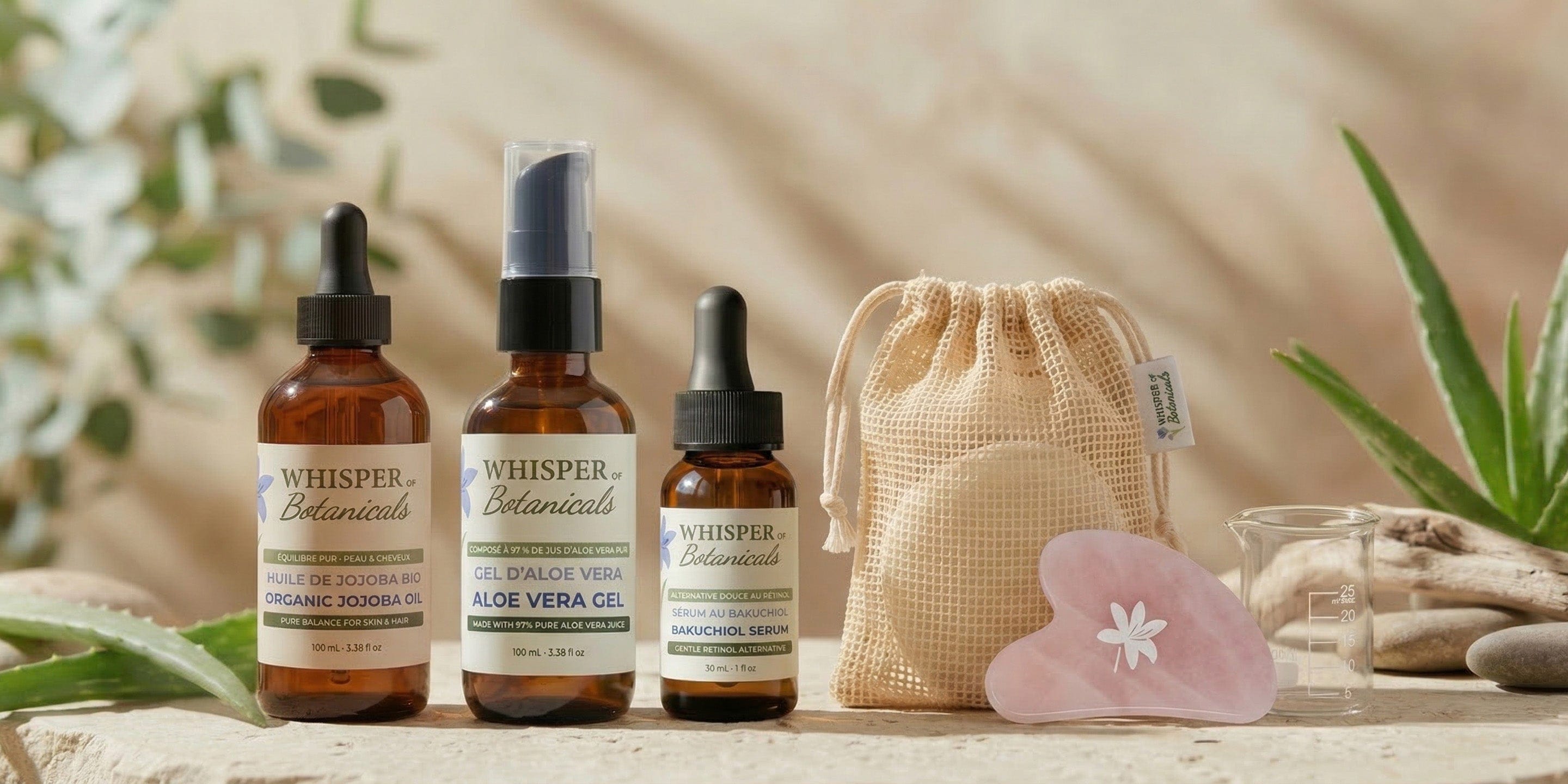
At Whisper of Botanicals, we believe safety should make DIY skincare feel calmer, not more intimidating. A good beginning usually comes down to a few trustworthy ingredients, proper tools, clean glass containers, and clear guidance that removes guesswork rather than adding to it.
That is why beginners often benefit from starting with:
-
a precision scale for accurate measuring
-
clean glass containers for mixing and storage
-
a small set of beginner-friendly ingredients
-
simple recipes and educational guides that explain not only what to do, but why it matters
The goal is not to turn skincare into something technical or stressful. It is to make thoughtful habits feel easy enough to keep.
Related reading
A natural next step after this guide would be:
Conclusion
DIY skincare can be safe, but safety does not come from enthusiasm alone. It comes from simple recipes, clean habits, accurate measuring, patch testing, and knowing your limits.
For beginners, the safest path is usually the least complicated one. Start small, follow clear guidance, pay attention to how your skin responds, and build confidence gradually.
That approach is not only safer. It is often what makes DIY skincare enjoyable in the first place.