

Starting DIY skincare often feels exciting until the question of tools comes up. Suddenly, something that seemed simple can start to feel technical. Do you need special equipment? How much is truly necessary? Is it possible to begin without buying a dozen things at once?
For most beginners, the answer is reassuringly simple. You do not need an elaborate setup. You need a small group of tools that help you measure accurately, mix neatly, store products properly, and stay organized as you learn.
That is where the real value of tools comes in. They are not about making DIY skincare look more professional. They are about making it easier to do well. The right tools reduce guesswork, support cleaner habits, and help recipes feel more approachable from the start.
This guide walks through the essential tools that matter most, why they help, and how to build a simple beginner setup without overcomplicating the process.
Why tools matter more than people expect

Many beginners focus first on ingredients, which makes sense. Ingredients are the exciting part. But tools are often what make the whole process feel calmer and more reliable.
When you have a way to measure properly, transfer liquids cleanly, mix in a stable container, and label what you made, everything becomes easier to follow and easier to repeat. Tools support consistency. They also support safety, because recipes are much harder to trust when measurements are vague and containers are improvised.
A good beginner setup does not need to feel technical. It just needs to remove friction.
The most useful first tool is a precision scale
If there is one tool that changes the DIY experience most, it is a small precision scale.
Beginners often assume they can start with teaspoons, tablespoons, or approximate amounts. That may feel easier at first, but it quickly creates confusion. A formula that is only “roughly measured” is harder to repeat, harder to troubleshoot, and harder to trust.
A precision scale helps you:
-
measure ingredients more accurately
-
repeat a recipe more consistently
-
reduce waste from trial and error
-
follow written formulas with more confidence
This is one of the simplest upgrades a beginner can make. It turns a vague process into a clearer one.
Glass beakers and mixing containers make the process easier
Once ingredients are measured, you need a clean place to combine them. A small glass beaker or mixing container is often enough for many beginner recipes.
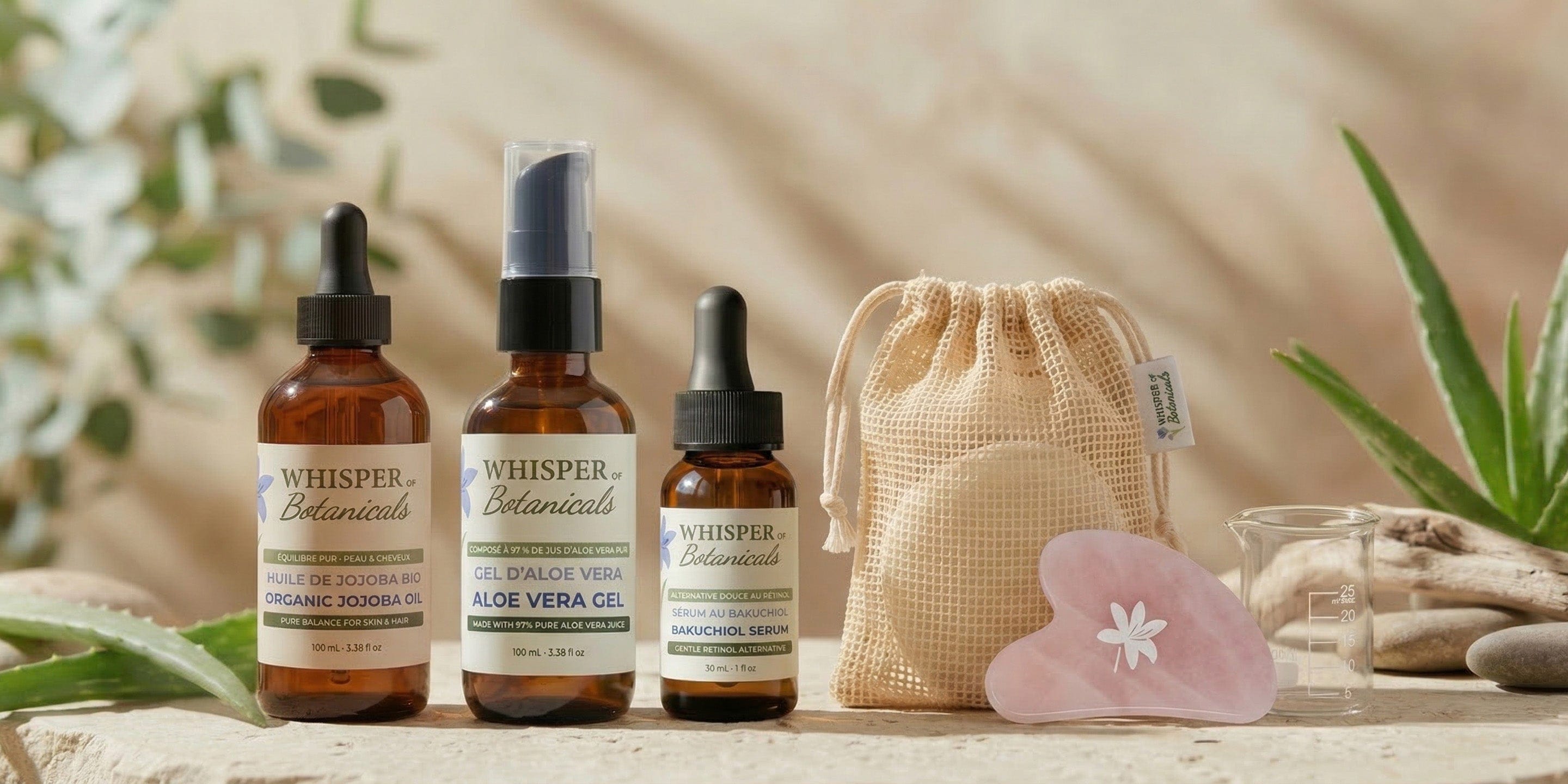
Glass works well because it feels stable, easy to clean, and easy to see through while mixing. It also fits naturally with Whisper of Botanicals's glass-first philosophy, which is part of the brand’s broader preference for transparency, simplicity, and reduced reliance on plastic packaging.
For beginners, the main benefit is practical: a proper mixing container makes the process less messy and more controlled. You can see texture changes more easily, pour more neatly, and work with less improvisation.
You do not need multiple sizes at first. One small beaker is enough for many simple projects.
A spatula, spoon, or small utensil helps with clean mixing

This may sound like a minor detail, but the right mixing utensil can make a surprising difference.
A small spatula or spoon helps you stir evenly, scrape down the sides of your container, and transfer product more cleanly into jars or bottles. It is one of those tools that does not feel exciting to buy, but becomes useful almost immediately.
For beginners, it also helps make recipes feel less awkward. When the process is physically easier, it becomes easier to focus on learning the ingredients and following the steps.
Funnels, bottles, and jars help you finish the recipe properly
A recipe is not finished when the mixing is done. It is finished when the product is stored in a way that feels clean, practical, and easy to use.
That is why simple filling and storage tools matter too.
A small funnel helps transfer liquids with less waste and less mess. Bottles and jars give the product a proper home. The right container also affects how easy the product is to dispense, how well it stays protected, and how likely you are to use it consistently.
This matters for both convenience and product care.
Beginners do not need a huge collection. A few versatile glass containers usually go much further than people expect.
Labels are simple, but they are part of good DIY habits

One of the easiest tools to overlook is also one of the most useful: labels.
When you are new to DIY skincare, it is surprisingly easy to forget when something was made, what variation you used, or which jar contains which formula. Even a very simple label helps keep the process organized.
A beginner label only needs a few basics:
-
product name
-
date made
-
optional notes, if relevant
This small habit makes DIY skincare feel more intentional. It also supports safer storage habits and helps you learn from what you make.
You do not need everything at once
This is often the most reassuring part: your first setup can stay very small.
A beginner usually does well with:
-
a precision scale
-
a glass beaker or mixing container
-
a spatula or spoon
-
one or two bottles or jars
-
a small funnel
-
blank labels
That is enough to start many simple projects cleanly and confidently. The point is not to build a full studio on day one. The point is to make your first few recipes easier to understand and easier to repeat.
A gentle way to begin with Whisper of Botanicals

At Whisper of Botanicals, we believe tools should make DIY skincare feel calmer, not more complicated. Beginners usually do not need more options. They need the right basics: a reliable precision scale, a glass beaker, clean containers, a simple utensil, and a clear path toward easy recipes and educational content.
That is why a beginner-friendly setup often starts with:
-
a precision scale for accurate measuring
-
a glass beaker for simple mixing
-
glass bottles or jars for clean storage
-
blank labels for organization
-
easy access to ingredients, recipes, and guides that explain what each tool is for
Related reading
A natural next step after this guide would be:
Conclusion
The essential tools for DIY skincare are much simpler than many beginners expect. You do not need an elaborate setup to begin well. You need a few practical items that help you measure accurately, mix cleanly, store properly, and stay organized.
For most people, that means starting with a precision scale, a glass mixing container, a small utensil, a funnel, a few containers, and labels. Once those basics are in place, recipes become much easier to approach with confidence.
The best beginner setup is usually the simplest one that helps you stay clear, calm, and consistent.