

For many people, the phrase endocrine disruptors appears suddenly and without much explanation. It may show up in an ingredient conversation, in a clean beauty discussion, or in questions about packaging and plastic. That can make the topic feel bigger, scarier, and more confusing than it needs to be.
A calm place to start is with the basic definition. Endocrine-disrupting chemicals are natural or human-made substances that may mimic, block, or otherwise interfere with the body’s hormones. Health agencies including NIEHS and Health Canada recognize endocrine-related effects as a real area of concern for some substances, while also treating it as a matter of substance-by-substance assessment rather than a blanket rule for everything in cosmetics.
That distinction matters. This is not a topic where “everything is dangerous” is helpful or accurate. It is also not a topic most consumers need to ignore completely. A more useful approach is to understand the concept, know why some people prefer a lower-exposure routine, and make more intentional choices where it feels realistic.
What are endocrine disruptors?

The endocrine system is the body’s hormone system. Hormones help regulate many important functions, including growth, development, metabolism, stress response, and reproduction. Endocrine disruptors are chemicals that may interfere with those hormone signals. NIEHS describes them as chemicals that may mimic or interfere with the body’s hormones, and the European Commission similarly describes endocrine disruptors as chemicals that may interfere with the hormonal system and produce harmful effects in humans or wildlife.
That does not mean every exposure creates harm, and it does not mean every cosmetic product contains endocrine disruptors. It means the concept is real, and certain substances are studied or regulated in part because of endocrine-related concerns. Health Canada says endocrine-related effects can be considered in chemical risk assessment and notes that studies have shown associations between exposure to certain endocrine-disrupting substances and a range of effects.
For a beginner, the most important takeaway is simple: this is a real scientific and regulatory topic, but it is not a reason to panic.
Why this comes up in cosmetics and personal care

Cosmetics and personal care products contain many different ingredients, and some of those ingredients — or some classes of chemicals used in certain products — have been part of endocrine-disruption discussions. NIEHS notes that personal care products can be an important source of exposure to a variety of chemicals, including endocrine-disrupting chemicals such as some phthalates and phenols, and that some chemicals in cosmetics are classified as endocrine disrupting.
This is one reason some consumers prefer simpler routines with fewer products, fewer fragrance-heavy formulas, and fewer non-essential extras. It is also why packaging enters the conversation. Some people are not only thinking about ingredients in a formula, but also about the materials surrounding that formula, especially when they want a more cautious, lower-plastic skincare experience. BPA, for example, is used in certain plastics and epoxy resins, and Canadian environmental indicators track BPA exposure in the population.
That still does not mean every bottle, jar, or formula should be treated the same way. It simply explains why more ingredient-conscious consumers often begin asking broader questions about exposure.
A balanced view matters more than fear
This is where the conversation often becomes unhelpful online. One side acts as if every modern cosmetic is unsafe. The other side acts as if consumer concern is automatically irrational. Neither approach really helps people make better decisions.
A more grounded view is that endocrine concerns are considered by regulators and researchers, and some substances are indeed banned or restricted case by case when safety assessments support that. The European Commission’s cosmetics framework specifically addresses substances with endocrine-disrupting properties through safety assessment and bans or restrictions where appropriate.
So the most useful consumer mindset is usually neither fear nor dismissal. It is discernment.
That might look like:
-
preferring simpler formulas
-
reducing unnecessary fragrance or non-essential extras
-
choosing brands that explain ingredients clearly
-
being thoughtful about packaging materials
-
avoiding the feeling that you need ten products to care for your skin
For many people, this lower-exposure mindset feels calmer and more sustainable than trying to chase certainty in an area that is often discussed in an exaggerated way online.
Why many people choose a simpler, more precautionary routine

One of the quiet strengths of simpler skincare is that it reduces noise.
When a routine contains fewer products and fewer ingredients, it often becomes easier to understand what you are using and why. That does not magically remove every possible concern, but it can reduce unnecessary complexity and help people feel more intentional about what they bring into their daily routine.
This is also where DIY skincare can feel appealing. A well-designed DIY practice often focuses on just a few ingredients, clear storage, proper tools, and formulas simple enough to understand.
A precautionary approach does not need to be extreme. Often it simply means choosing less when less is enough.
What this means for Whisper of Botanicals
At Whisper of Botanicals, we do not approach this topic from a fear-based angle. We approach it from a clarity-based one.
Our point of view is that many people want a skincare experience with:
-
fewer non-essential additives
-
simpler formulas
-
more transparent ingredients
-
less unnecessary plastic
-
tools and containers that support a more intentional routine
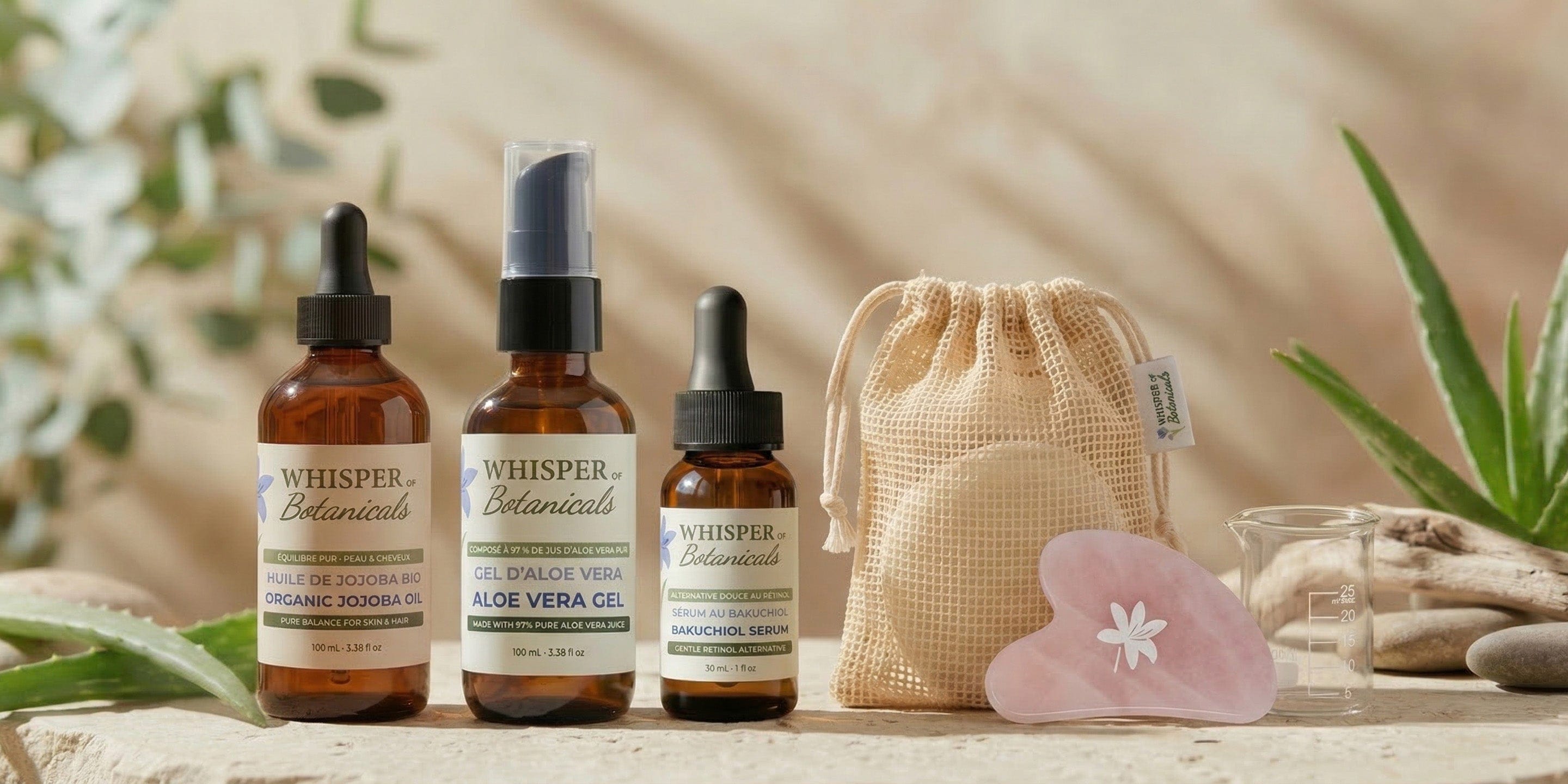
That is why our broader philosophy leans toward simple botanical formulations, educational content, and glass packaging.
This is not about claiming perfection. It is about choosing a direction that feels more aligned with the kind of skincare experience we want to create.
A gentle way to begin with Whisper of Botanicals

At Whisper of Botanicals, we believe this topic should lead to clearer choices, not more anxiety.
A helpful next step might be to:
-
explore simple beginner ingredients
-
read more about why simpler skincare can be better
-
start with one beginner-friendly recipe rather than building a crowded routine
That path keeps the focus where it belongs: understanding more, reducing overwhelm, and making skincare feel calmer.
Related reading
A natural next step after this guide would be:
Conclusion
Endocrine disruptors are a real scientific and regulatory topic, but they are often discussed in ways that create more fear than clarity.
A more helpful approach is to understand the term, recognize why some consumers prefer a more cautious routine, and make practical choices that reduce unnecessary complexity. For many people, that means choosing simpler formulas, more transparent ingredients, and a lower-plastic skincare experience where possible.
That approach is not about perfection. It is about being intentional.